
Boiler Finance Greenock: Budgeting for the Boiler and Any Wider Heating Work
Understand the key costs involved in boiler installation, from labour and pipework to controls and flue requirements. Learn how to compare finance options, avoid unexpected expenses and budget confidently for your new boiler in Greenock.

Why you can trust our content
We understand that the boiler industry can be confusing, with plenty of outdated or misleading information. That’s why we rely only on trusted, proven sources to guide our advice and installations:

At a glance
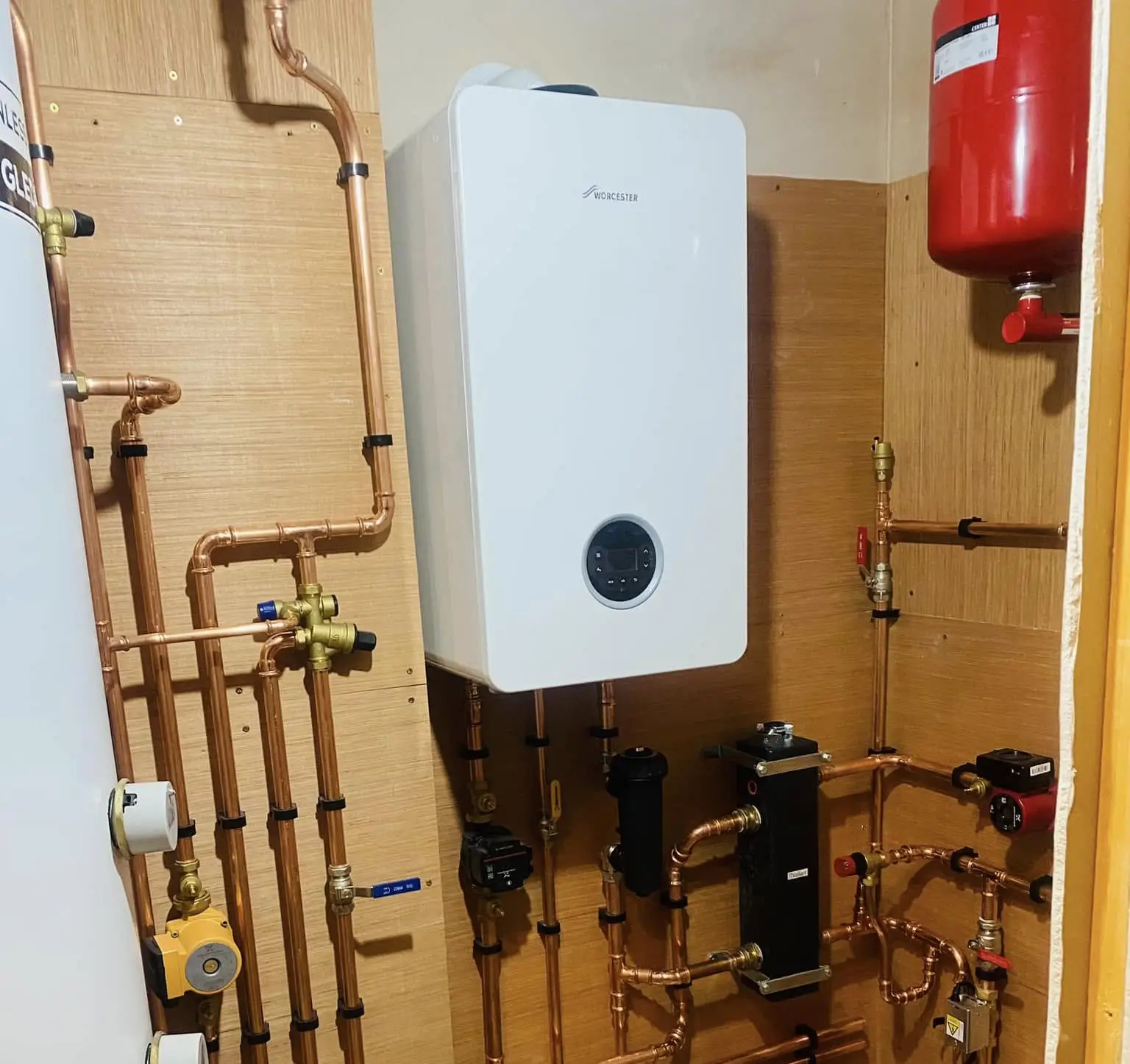
Replacing a boiler is not always as simple as budgeting for the appliance itself. The final project can also involve installation labour, controls, pipework alterations, flue work or other adjustments to the existing heating system.
This matters when considering boiler finance greenock homeowners may be offered, because the amount you need to budget for depends on the scope of the installation. A finance arrangement based only on the boiler price may not tell you the full picture if additional work is required.
Before agreeing to any payment arrangement, it is worth understanding what the installation involves, which elements are essential and whether the quoted figure covers the wider heating system.
What does a boiler budget actually need to cover?
The boiler is usually the most obvious part of the project, but it is not the only consideration.
Depending on the property and installation, the overall budget may need to account for:
- The new boiler
- Installation labour
- Heating controls
- Flue components
- Condensate arrangements
- Pipework alterations
- Removal of the old boiler
- System preparation or cleaning where appropriate
- Replacement valves or other components if required
- Any changes needed because of the boiler’s location
The exact requirements vary from one property to another. A straightforward replacement may involve relatively little additional work, while an older system may require several adjustments.
That is why it is useful to establish the installation scope before deciding how much you need to budget.
If you are considering spreading the cost of a boiler replacement, ask for a clear breakdown of the proposed installation first. It gives you a better basis for understanding the amount being financed or paid.
Could existing pipework change the amount you need to budget?
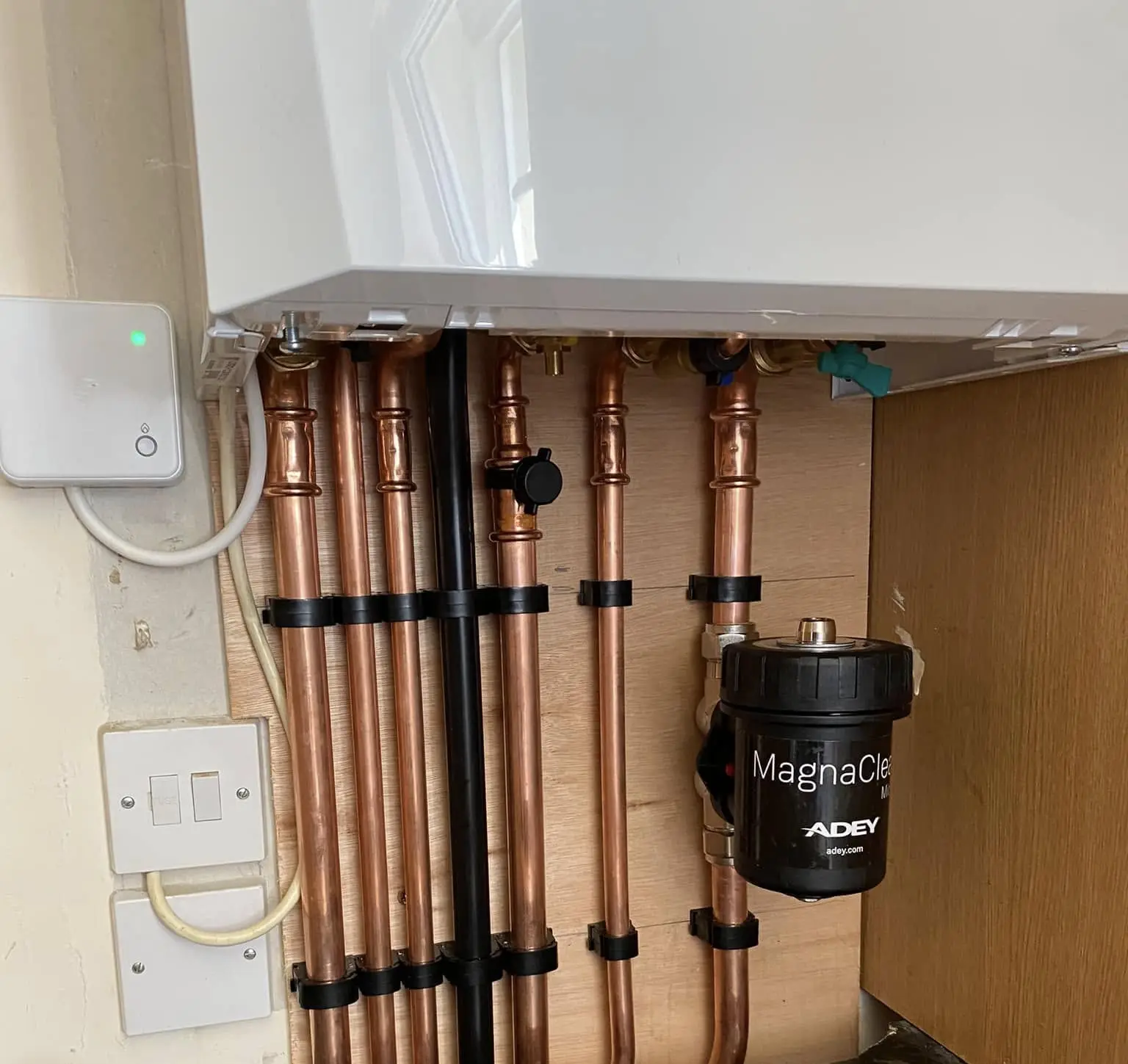
Yes. Pipework connects the boiler with the heating system, gas supply, water supply and drainage arrangements, so its condition and configuration can affect the installation.
In some properties, the existing pipework may be suitable for the new boiler and can be retained.
In others, an installer may identify:
- Corroded or damaged sections
- Connections that need altering
- Pipework that needs rerouting
- Unsuitable sections around the boiler
- Issues affecting circulation
- Requirements associated with the new boiler position
These changes do not necessarily indicate a problem with the proposed boiler. They may simply reflect differences between the old and new installation.
When planning the cost for new boiler installation, it is therefore useful to know whether the quoted figure assumes the existing pipework will remain unchanged.
Do radiators need to be included in the budget?
Not automatically.
A boiler replacement does not mean every radiator has to be replaced. If the radiators are in reasonable condition and provide suitable heat, they may be retained.
However, an installer may identify individual radiators or valves that require attention.
Possible considerations include:
- Leaking radiator valves
- Corrosion
- Poor heat distribution
- Radiators that are unsuitable for particular rooms
- Persistent cold spots
- Restricted circulation
If replacement is recommended, ask whether it is necessary for the boiler installation or simply an optional improvement.
This distinction can help you keep the project budget focused on work that genuinely needs to be carried out.
What role do heating controls play in the budget?
Controls can be another part of the installation that is easy to overlook.
Depending on the existing setup, you may have a basic thermostat, programmer, timer or another control arrangement. Some older controls may remain usable, while others may be replaced as part of the upgrade.
If new controls are recommended, find out whether they are:
- Included in the main quotation
- Listed as an optional upgrade
- Required for compatibility
- Being replaced because the existing controls are faulty or outdated
A clear breakdown makes it easier to understand what your payment covers.
Can the boiler location affect the overall cost?
It can.
Replacing a boiler in its existing location may involve fewer changes than moving it elsewhere in the property. A new location can affect several parts of the installation.
For example, the installer may need to consider:
- New pipework routes
- Gas supply connections
- Flue positioning
- Condensate drainage
- Access to the appliance
- Installation clearances
- Wall or mounting requirements
If you are considering moving the boiler, mention this before the quotation is prepared.
Otherwise, a figure based on a like-for-like replacement may not reflect the work involved in relocating the appliance.
What should you ask before arranging finance?
Finance is a payment method, not a substitute for understanding the installation itself.
Before entering into any finance arrangement, establish:
- What boiler is included?
- What installation work is covered?
- Are controls included?
- Are pipework alterations included?
- Is flue work included?
- Is the old boiler being removed?
- Could additional work be identified during installation?
- Are any items optional?
- What is the total amount being financed?
- What are the applicable payment terms and conditions?
The precise terms of any finance product will depend on the provider and agreement, so they should be checked carefully before proceeding.
A homeowner should understand both the installation and the payment arrangement rather than focusing solely on the monthly figure.
If you are comparing payment options, ask the installer to separate the installation scope from the finance information. This makes it easier to understand exactly what you are paying for.
See how much you could save
Which fuel powers your boiler?
Mains Gas
LPG
It just takes 60 Seconds
And then you can book a free consultation
Why is the total project price more useful than the boiler price alone?
A boiler can have a clearly stated purchase price, but that figure does not necessarily represent the cost of getting the complete system installed.
The overall project may include several separate elements.
| Cost area | What to consider |
| Boiler | Model, output and specification |
| Labour | Work involved in removing and installing the appliance |
| Controls | Existing controls versus new controls |
| Pipework | Whether alterations are needed |
| Flue | New or altered flue arrangements |
| Condensate | Suitable drainage connection |
| System preparation | Cleaning or preparation where required |
| Removal | Disposal or removal of the existing appliance |
| Additional components | Valves or other parts identified during assessment |
Not every project will require every item. The table simply shows why comparing appliance prices alone can give an incomplete picture.
The same principle applies when considering cost for new boiler installation. The installation requirements of the property should be understood before deciding what budget is appropriate.
Should you allow room in your budget for unexpected work?
It is sensible to understand whether the quotation is fixed for the stated scope and what happens if additional work is discovered.
Existing heating systems can contain hidden pipework and components that are not fully visible before work starts. An installer may occasionally identify an issue once an appliance or connection has been exposed.
That does not mean you should automatically assume the final bill will be higher.
Instead, ask:
- What assumptions has the quotation been based on?
- What work is excluded?
- How would additional work be explained?
- Would you be asked to approve extra work before it is carried out?
Clear communication can make unexpected findings easier to manage.
Can you avoid paying for unnecessary heating work?
A sensible assessment should distinguish between essential installation requirements and optional improvements.
For example, a heating professional may identify an old radiator valve that is still functioning but showing signs of wear. Replacing it might be sensible, but it is different from work that is necessary to connect the new boiler.
Similarly, you may choose to upgrade your heating controls while replacing the boiler. That can be useful, but it should be clear that it is an additional choice rather than an unexplained part of the installation.
A transparent quotation helps you decide what you want included.
A practical budgeting example
Imagine a homeowner has an older combi boiler in the same location where the replacement will be installed.
The existing radiators are in good condition, but the thermostat is outdated. The pipework requires a small alteration to suit the new boiler, while the flue and condensate arrangements also need to be checked.
The budget would therefore need to account for more than the boiler alone.
If the homeowner only looked at the appliance price, they could underestimate the amount required for the complete project.
This is why a detailed quotation should come before making assumptions about the amount of finance or savings needed.
How can you compare finance options sensibly?
If more than one payment option is available, compare the actual terms rather than focusing only on the monthly repayment.
Depending on the agreement, relevant details may include:
- Total amount payable
- Deposit requirements, if any
- Length of the agreement
- Monthly payment
- Interest or other charges
- Early repayment conditions
- Eligibility requirements
- Any applicable terms and conditions
Finance products can differ considerably, so the provider’s documentation should be read carefully.
A lower monthly payment does not necessarily mean a lower total amount payable. Conversely, a shorter repayment period may involve higher monthly payments while reducing the length of the agreement.
The important point is to understand the full terms before entering into a financial commitment.
What if the boiler quote changes after the initial assessment?
If the installation requirements change, ask for the revised scope and cost to be explained.
For example, the installer may discover that a section of pipework needs replacing or that the proposed boiler location requires additional work.
You should be able to understand:
- What has changed
- Why the work is required
- How much it adds to the project
- Whether it is essential or optional
- Whether the finance arrangement needs to be adjusted
This is particularly important if you are using finance because the amount borrowed or repayment terms may be linked to the agreed installation cost.
How can Inver-Heat help you understand the installation budget?
Planning a boiler replacement starts with understanding the property and the work required.
For homeowners considering boiler finance greenock, it can be useful to discuss the complete installation before concentrating on payment arrangements. That includes the boiler, controls, pipework, flue, condensate arrangements and any other relevant system components.
Inver-Heat can discuss the proposed installation and help explain which parts of the heating system may need attention.
If you are planning a boiler replacement, get the installation scope clarified first so you can make a more informed decision about how to budget for the work.
Related articles
Mains Gas
LPG
At a glance
Replacing a boiler is not always as simple as budgeting for the appliance itself. The final project can also involve installation labour, controls, pipework alterations, flue work or other adjustments to the existing heating system.
This matters when considering boiler finance greenock homeowners may be offered, because the amount you need to budget for depends on the scope of the installation. A finance arrangement based only on the boiler price may not tell you the full picture if additional work is required.
Before agreeing to any payment arrangement, it is worth understanding what the installation involves, which elements are essential and whether the quoted figure covers the wider heating system.
What does a boiler budget actually need to cover?
The boiler is usually the most obvious part of the project, but it is not the only consideration.
Depending on the property and installation, the overall budget may need to account for:
- The new boiler
- Installation labour
- Heating controls
- Flue components
- Condensate arrangements
- Pipework alterations
- Removal of the old boiler
- System preparation or cleaning where appropriate
- Replacement valves or other components if required
- Any changes needed because of the boiler’s location
The exact requirements vary from one property to another. A straightforward replacement may involve relatively little additional work, while an older system may require several adjustments.
That is why it is useful to establish the installation scope before deciding how much you need to budget.
If you are considering spreading the cost of a boiler replacement, ask for a clear breakdown of the proposed installation first. It gives you a better basis for understanding the amount being financed or paid.
Could existing pipework change the amount you need to budget?
Yes. Pipework connects the boiler with the heating system, gas supply, water supply and drainage arrangements, so its condition and configuration can affect the installation.
In some properties, the existing pipework may be suitable for the new boiler and can be retained.
In others, an installer may identify:
- Corroded or damaged sections
- Connections that need altering
- Pipework that needs rerouting
- Unsuitable sections around the boiler
- Issues affecting circulation
- Requirements associated with the new boiler position
These changes do not necessarily indicate a problem with the proposed boiler. They may simply reflect differences between the old and new installation.
When planning the cost for new boiler installation, it is therefore useful to know whether the quoted figure assumes the existing pipework will remain unchanged.
Do radiators need to be included in the budget?
Not automatically.
A boiler replacement does not mean every radiator has to be replaced. If the radiators are in reasonable condition and provide suitable heat, they may be retained.
However, an installer may identify individual radiators or valves that require attention.
Possible considerations include:
- Leaking radiator valves
- Corrosion
- Poor heat distribution
- Radiators that are unsuitable for particular rooms
- Persistent cold spots
- Restricted circulation
If replacement is recommended, ask whether it is necessary for the boiler installation or simply an optional improvement.
This distinction can help you keep the project budget focused on work that genuinely needs to be carried out.
What role do heating controls play in the budget?
Controls can be another part of the installation that is easy to overlook.
Depending on the existing setup, you may have a basic thermostat, programmer, timer or another control arrangement. Some older controls may remain usable, while others may be replaced as part of the upgrade.
If new controls are recommended, find out whether they are:
- Included in the main quotation
- Listed as an optional upgrade
- Required for compatibility
- Being replaced because the existing controls are faulty or outdated
A clear breakdown makes it easier to understand what your payment covers.
Can the boiler location affect the overall cost?
It can.
Replacing a boiler in its existing location may involve fewer changes than moving it elsewhere in the property. A new location can affect several parts of the installation.
For example, the installer may need to consider:
- New pipework routes
- Gas supply connections
- Flue positioning
- Condensate drainage
- Access to the appliance
- Installation clearances
- Wall or mounting requirements
If you are considering moving the boiler, mention this before the quotation is prepared.
Otherwise, a figure based on a like-for-like replacement may not reflect the work involved in relocating the appliance.
What should you ask before arranging finance?
Finance is a payment method, not a substitute for understanding the installation itself.
Before entering into any finance arrangement, establish:
- What boiler is included?
- What installation work is covered?
- Are controls included?
- Are pipework alterations included?
- Is flue work included?
- Is the old boiler being removed?
- Could additional work be identified during installation?
- Are any items optional?
- What is the total amount being financed?
- What are the applicable payment terms and conditions?
The precise terms of any finance product will depend on the provider and agreement, so they should be checked carefully before proceeding.
A homeowner should understand both the installation and the payment arrangement rather than focusing solely on the monthly figure.
If you are comparing payment options, ask the installer to separate the installation scope from the finance information. This makes it easier to understand exactly what you are paying for.
See how much you could save
Which fuel powers your boiler?
Mains Gas
LPG
It just takes 60 Seconds
And then you can book a free consultation
Why is the total project price more useful than the boiler price alone?
A boiler can have a clearly stated purchase price, but that figure does not necessarily represent the cost of getting the complete system installed.
The overall project may include several separate elements.
| Cost area | What to consider |
| Boiler | Model, output and specification |
| Labour | Work involved in removing and installing the appliance |
| Controls | Existing controls versus new controls |
| Pipework | Whether alterations are needed |
| Flue | New or altered flue arrangements |
| Condensate | Suitable drainage connection |
| System preparation | Cleaning or preparation where required |
| Removal | Disposal or removal of the existing appliance |
| Additional components | Valves or other parts identified during assessment |
Not every project will require every item. The table simply shows why comparing appliance prices alone can give an incomplete picture.
The same principle applies when considering cost for new boiler installation. The installation requirements of the property should be understood before deciding what budget is appropriate.
Should you allow room in your budget for unexpected work?
It is sensible to understand whether the quotation is fixed for the stated scope and what happens if additional work is discovered.
Existing heating systems can contain hidden pipework and components that are not fully visible before work starts. An installer may occasionally identify an issue once an appliance or connection has been exposed.
That does not mean you should automatically assume the final bill will be higher.
Instead, ask:
- What assumptions has the quotation been based on?
- What work is excluded?
- How would additional work be explained?
- Would you be asked to approve extra work before it is carried out?
Clear communication can make unexpected findings easier to manage.
Can you avoid paying for unnecessary heating work?
A sensible assessment should distinguish between essential installation requirements and optional improvements.
For example, a heating professional may identify an old radiator valve that is still functioning but showing signs of wear. Replacing it might be sensible, but it is different from work that is necessary to connect the new boiler.
Similarly, you may choose to upgrade your heating controls while replacing the boiler. That can be useful, but it should be clear that it is an additional choice rather than an unexplained part of the installation.
A transparent quotation helps you decide what you want included.
A practical budgeting example
Imagine a homeowner has an older combi boiler in the same location where the replacement will be installed.
The existing radiators are in good condition, but the thermostat is outdated. The pipework requires a small alteration to suit the new boiler, while the flue and condensate arrangements also need to be checked.
The budget would therefore need to account for more than the boiler alone.
If the homeowner only looked at the appliance price, they could underestimate the amount required for the complete project.
This is why a detailed quotation should come before making assumptions about the amount of finance or savings needed.
How can you compare finance options sensibly?
If more than one payment option is available, compare the actual terms rather than focusing only on the monthly repayment.
Depending on the agreement, relevant details may include:
- Total amount payable
- Deposit requirements, if any
- Length of the agreement
- Monthly payment
- Interest or other charges
- Early repayment conditions
- Eligibility requirements
- Any applicable terms and conditions
Finance products can differ considerably, so the provider’s documentation should be read carefully.
A lower monthly payment does not necessarily mean a lower total amount payable. Conversely, a shorter repayment period may involve higher monthly payments while reducing the length of the agreement.
The important point is to understand the full terms before entering into a financial commitment.
What if the boiler quote changes after the initial assessment?
If the installation requirements change, ask for the revised scope and cost to be explained.
For example, the installer may discover that a section of pipework needs replacing or that the proposed boiler location requires additional work.
You should be able to understand:
- What has changed
- Why the work is required
- How much it adds to the project
- Whether it is essential or optional
- Whether the finance arrangement needs to be adjusted
This is particularly important if you are using finance because the amount borrowed or repayment terms may be linked to the agreed installation cost.
How can Inver-Heat help you understand the installation budget?
Planning a boiler replacement starts with understanding the property and the work required.
For homeowners considering boiler finance greenock, it can be useful to discuss the complete installation before concentrating on payment arrangements. That includes the boiler, controls, pipework, flue, condensate arrangements and any other relevant system components.
Inver-Heat can discuss the proposed installation and help explain which parts of the heating system may need attention.
If you are planning a boiler replacement, get the installation scope clarified first so you can make a more informed decision about how to budget for the work.


