
Combi Boiler Replacement Greenock: What Else Should Be Checked When the Boiler Is Upgraded?
Replacing a combi boiler can seem like a straightforward job. The old appliance comes out, the new one goes in, and the heating system is connected. In practice, a boiler replacement is a good opportunity to check whether the rest of the heating system is still suitable. Pipework, radiators, controls, water pressure, the flue route…

Why you can trust our content
We understand that the boiler industry can be confusing, with plenty of outdated or misleading information. That’s why we rely only on trusted, proven sources to guide our advice and installations:

At a glance
Replacing a combi boiler can seem like a straightforward job. The old appliance comes out, the new one goes in, and the heating system is connected. In practice, a boiler replacement is a good opportunity to check whether the rest of the heating system is still suitable.
Pipework, radiators, controls, water pressure, the flue route and condensate arrangements can all affect how the new boiler operates. Some components may be perfectly suitable to retain, while others may need attention because of their age, condition or compatibility.
When arranging a combi boiler replacement greenock homeowners should therefore look beyond the appliance itself. A proper assessment can help identify issues before installation rather than discovering them after the new boiler has been fitted.
Why should the wider heating system be checked?
A combi boiler does two main jobs. It heats water for the radiators and provides hot water directly when a tap or shower is opened.
That means the boiler depends on several other parts of the property to work effectively.
The wider system may include:
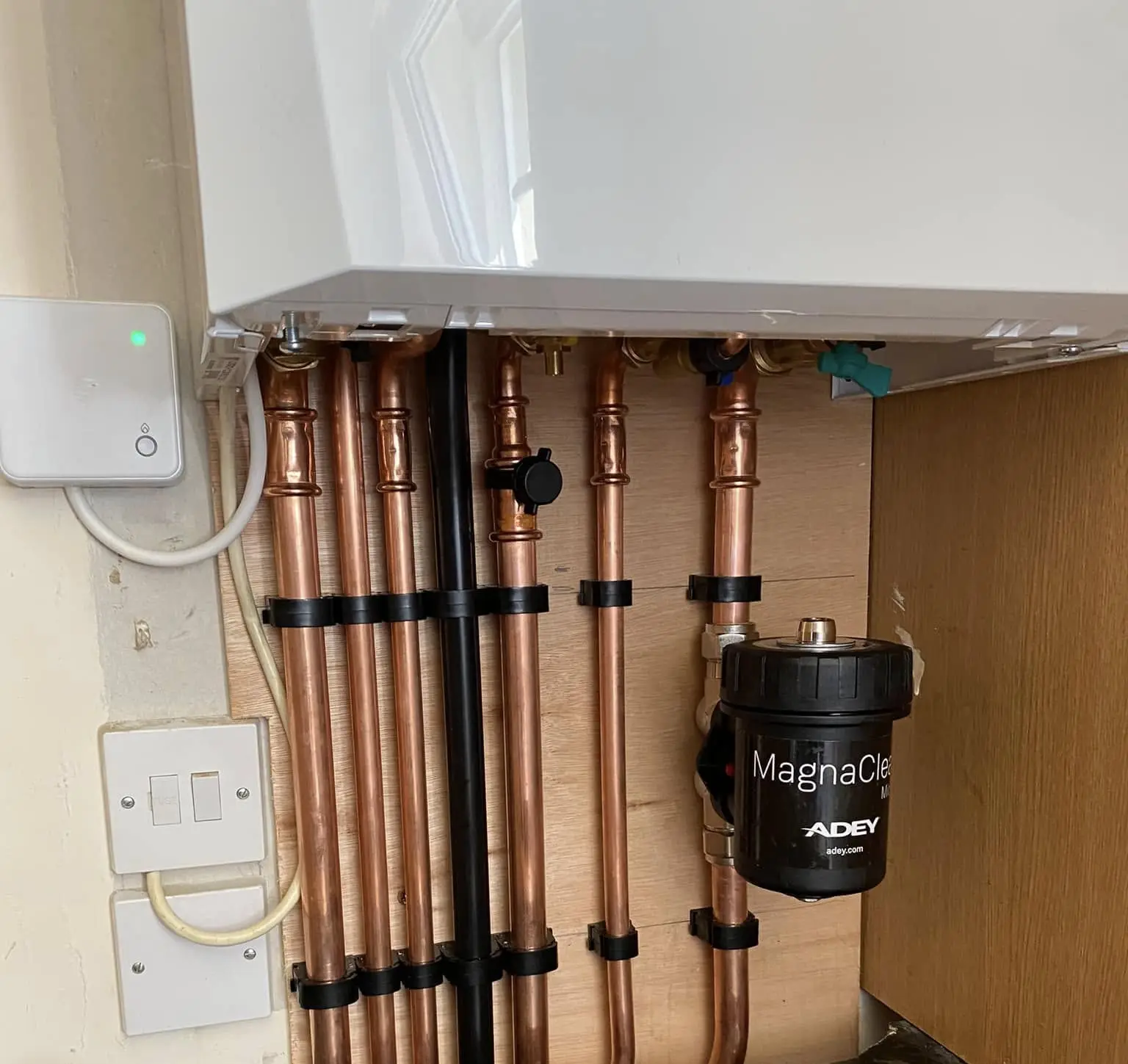
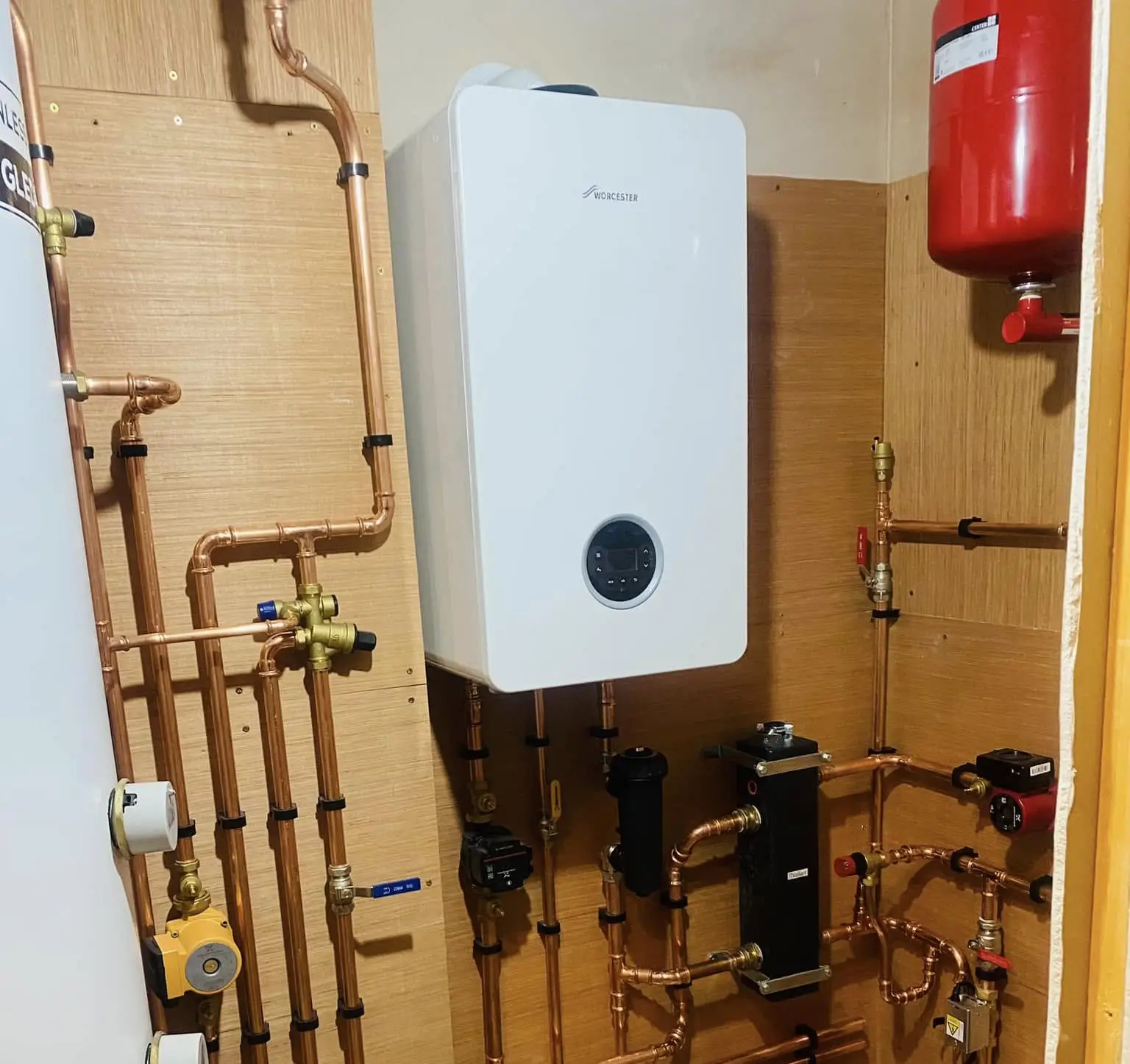
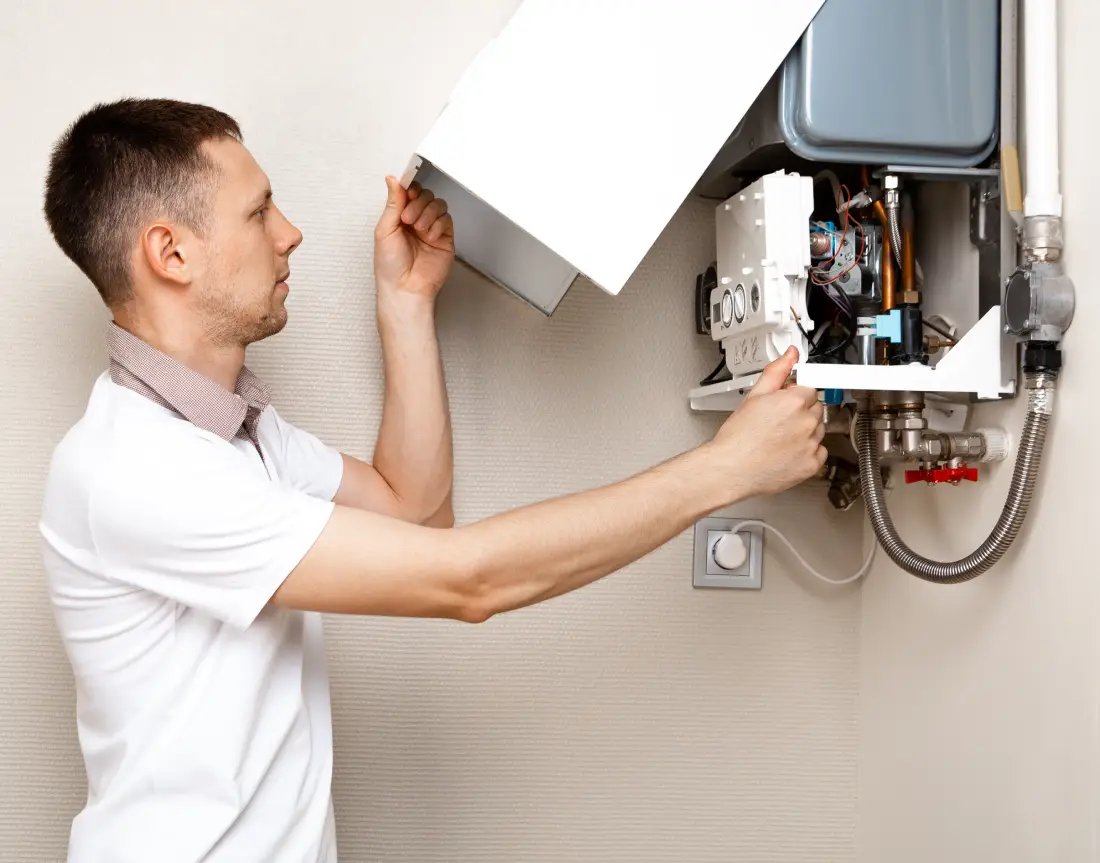
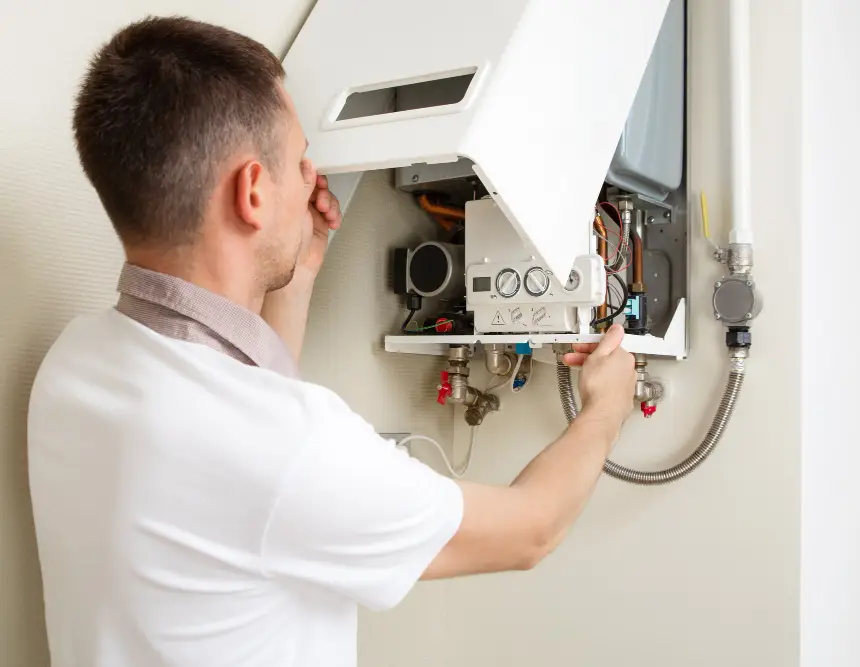
- Heating and hot water pipework
- Radiators and radiator valves
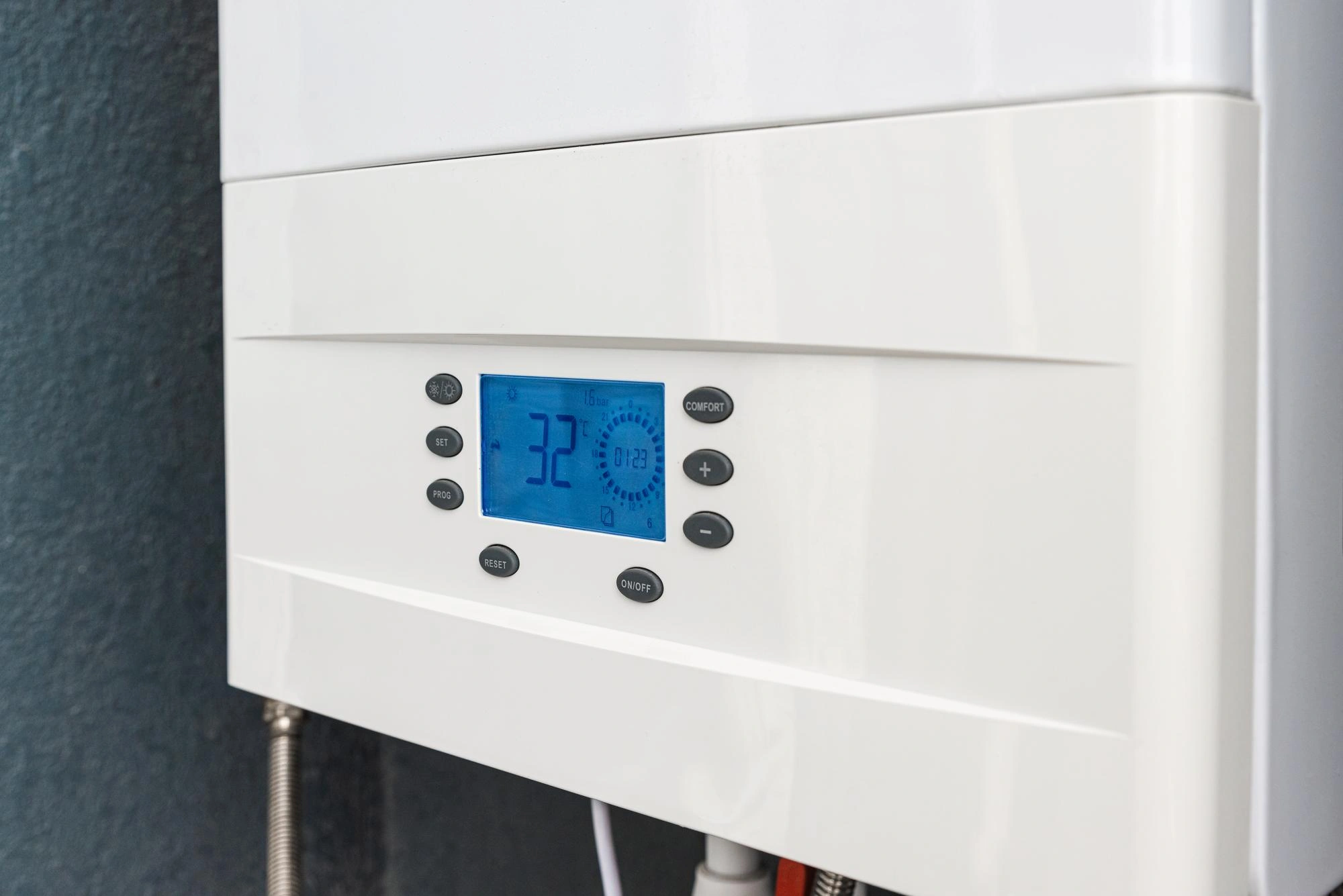
- Thermostat and heating controls
- Cold water supply
- Gas supply
- Flue and terminal
- Condensate drainage
- Isolation valves and connections
A replacement boiler can be more modern and efficient than the appliance it replaces, but that does not automatically resolve problems elsewhere in the system.
For example, a radiator that has poor circulation may still perform poorly after the boiler is replaced. Likewise, an old thermostat may continue to provide limited control over the heating.
If your existing combi boiler is being replaced, asking for the surrounding system to be assessed can help you understand which components can remain and which may need attention.
Could the existing pipework affect a combi boiler replacement?
Yes. Pipework connects the boiler to the radiators, water supply, gas supply and drainage arrangements, so its condition and configuration matter.
The installer may consider whether:
- The existing connections are suitable
- Pipework needs to be altered because of the new boiler
- There are signs of leaks or corrosion
- The pipe layout suits the new appliance location
- The system contains debris or sludge
- The gas supply is appropriate for the proposed appliance
Not every replacement requires major pipework changes. In many installations, suitable existing connections can be retained.
However, it is better for the installer to establish this during the assessment rather than assume that every connection will be identical to the old boiler.
Do radiators need replacing at the same time?
Usually, not automatically.
Radiators can remain in place if they are in suitable condition and provide adequate heat. However, replacement is sometimes considered where a radiator is damaged, heavily corroded, incorrectly sized or affected by persistent circulation problems.
Radiator valves can also be worth checking. A valve that sticks or leaks can cause heating problems independently of the boiler.
A replacement project may therefore involve keeping most of the existing radiators while addressing one or two specific issues.
This can be more practical than replacing every component simply because the boiler is new.
What about the heating controls?
Controls are another part of the system that can be overlooked during a boiler replacement.
An older thermostat or programmer may still operate, but it may not provide the level of control expected from a modern heating system.
Depending on the existing setup, the installer may assess:
- Thermostat condition
- Programmer or timer
- Wiring
- Control compatibility
- Thermostat location
- How heating and hot water demand are managed
If the controls are being replaced, you should know whether this is included in the installation or quoted separately.
Good controls allow the homeowner to manage heating more effectively and can help the boiler respond appropriately to demand.
Can the water supply affect combi boiler performance?
Yes. Unlike a system boiler with a separate hot water cylinder, a combi boiler heats domestic hot water as it is required.
The performance you experience at a tap therefore depends partly on the incoming mains water supply.
Relevant factors can include:
- Mains water pressure
- Available flow rate
- Number of outlets being used
- Boiler hot water output
- Existing pipework
- Shower and tap requirements
A larger combi boiler does not automatically solve every hot water issue. If the incoming water supply has limited flow, that can remain a limiting factor.
This is why checking the property’s water supply can be particularly useful before selecting a replacement appliance.
What should happen to the old flue?
The flue is an important part of the boiler installation and should be considered when the replacement is planned.
The new appliance may use a different flue arrangement from the old boiler. The installer therefore needs to consider the route, termination and condition of the existing arrangement rather than simply assuming that it can be reused.
Depending on the installation, the existing flue may need to be replaced or altered.
The same applies to condensate drainage. A condensing boiler produces condensate that needs a suitable route to a drain or other appropriate connection.
A quotation should make it clear what flue and condensate work is included.
Which parts of the system should be checked before replacement?
A useful assessment looks at the main connections and components rather than concentrating exclusively on the boiler.
| Component | What may be checked |
| Pipework | Condition, connections and suitability |
| Radiators | Condition, sizing and heat distribution |
| Radiator valves | Operation, leaks and condition |
| Controls | Compatibility, wiring and operation |
| Water supply | Pressure and flow where relevant |
| Gas supply | Suitability for the proposed boiler |
| Flue | Route, condition and termination |
| Condensate | Drainage route and connections |
| Boiler location | Access, clearances and installation requirements |
The exact checks required will depend on the property and proposed appliance.
The purpose is not to create unnecessary work. It is to establish whether the existing installation can support the replacement safely and effectively.
Before agreeing to a replacement, ask the installer which existing components they intend to retain and whether any have been identified as requiring attention.
Could the boiler location change the work required?
It can.
If the replacement boiler is being installed in the same position, some connections may be relatively straightforward. However, the new appliance may have different dimensions or connection arrangements.
A homeowner may also want to move the boiler to a different location. This can introduce additional considerations around:
- Pipework routes
- Flue position
- Condensate drainage
- Gas connections
- Access
- Installation clearances
- Wall construction or mounting requirements
Moving a boiler is therefore different from replacing it in the same location.
If you are considering a new position, make sure the quotation reflects that from the beginning.
How can you avoid unexpected boiler replacement costs?
The best approach is to establish the scope of work before installation starts.
Ask the installer to explain:
- Which boiler is being supplied
- Which existing components will remain
- Whether controls are being replaced
- Whether pipework alterations are expected
- Whether the flue arrangement is included
- Whether system cleaning or preparation is required
- Whether the old appliance will be removed
- Whether any optional improvements have been included
- What could lead to additional work
This can make boiler replacement cost easier to understand because you are comparing the actual installation requirements rather than just the appliance price.
It is also useful to distinguish essential work from optional improvements. For example, replacing a faulty component may be necessary, while upgrading another perfectly serviceable part may simply be a choice.
Is boiler replacement an opportunity to improve the system?
It can be.
A replacement project gives an installer access to parts of the heating system that may not normally be inspected closely. This can make it a sensible time to identify issues such as poor circulation, unsuitable controls or deteriorating components.
That does not mean everything should be replaced.
A sensible approach is to assess each component individually and ask whether it is:
- Suitable
- Safe
- In good enough condition
- Compatible with the proposed boiler
- Performing as expected
This avoids turning a straightforward boiler replacement into unnecessary additional work while still addressing genuine problems.
A typical example
Consider a property with an older combi boiler, several radiators that remain in good condition and an ageing thermostat.
The boiler itself may need replacing because of its age or reliability. The radiators may be suitable to keep, but the thermostat could be replaced as part of the upgrade.
The pipework may also require a small alteration around the new boiler connections.
In this situation, the sensible approach is not necessarily to replace the whole heating system. It is to identify which parts require attention and which can continue to serve the property.
What should you compare when choosing a replacement quote?
When reviewing quotations, look beyond the boiler model and headline figure.
Check whether each quotation explains:
| Quotation detail | Why it matters |
| Boiler model | Establishes exactly what is being supplied |
| Controls | Shows whether the control system is included |
| Pipework | Identifies possible alterations |
| Flue | Confirms whether required flue work is covered |
| Condensate | Shows whether drainage arrangements are included |
| Old boiler removal | Clarifies what happens to the existing appliance |
| System preparation | Identifies any cleaning or preparation included |
| Additional work | Highlights possible exclusions or assumptions |
| Warranty information | Clarifies what cover is associated with the installation |
Two quotations can look similar while covering different scopes of work.
A detailed quotation makes those differences easier to identify.
What if the existing heating system has a problem?
A boiler replacement does not necessarily need to wait until every minor imperfection in the system has been corrected.
However, significant faults should be identified and addressed where they could affect the safe or effective operation of the new appliance.
For example, persistent leaks, damaged valves or serious circulation issues should not simply be ignored because the boiler is being replaced.
If a problem is found, ask the installer to explain:
- What has been identified
- Why it matters
- Whether it needs immediate attention
- Whether it affects the proposed installation
- What work is recommended
This gives you a clearer basis for deciding what should form part of the replacement.
How can Inver-Heat help with a combi boiler replacement?
A successful replacement is about more than taking out the old appliance and connecting a new one. The surrounding heating system needs to be considered so that the new boiler is installed into a suitable setup.
For a combi boiler replacement greenock, this means looking at the boiler, pipework, radiators, controls, water supply, flue and condensate arrangements as appropriate to the property.
If you are planning a replacement, the team at Inver-Heat can assess the installation requirements and explain what work may be involved.
If you are unsure whether your existing heating system is suitable for a new combi boiler, discuss the property and current setup with a qualified heating professional before making a decision.
Related articles
Mains Gas
LPG
At a glance
Replacing a combi boiler can seem like a straightforward job. The old appliance comes out, the new one goes in, and the heating system is connected. In practice, a boiler replacement is a good opportunity to check whether the rest of the heating system is still suitable.
Pipework, radiators, controls, water pressure, the flue route and condensate arrangements can all affect how the new boiler operates. Some components may be perfectly suitable to retain, while others may need attention because of their age, condition or compatibility.
When arranging a combi boiler replacement greenock homeowners should therefore look beyond the appliance itself. A proper assessment can help identify issues before installation rather than discovering them after the new boiler has been fitted.
Why should the wider heating system be checked?
A combi boiler does two main jobs. It heats water for the radiators and provides hot water directly when a tap or shower is opened.
That means the boiler depends on several other parts of the property to work effectively.
The wider system may include:
- Heating and hot water pipework
- Radiators and radiator valves
- Thermostat and heating controls
- Cold water supply
- Gas supply
- Flue and terminal
- Condensate drainage
- Isolation valves and connections
A replacement boiler can be more modern and efficient than the appliance it replaces, but that does not automatically resolve problems elsewhere in the system.
For example, a radiator that has poor circulation may still perform poorly after the boiler is replaced. Likewise, an old thermostat may continue to provide limited control over the heating.
If your existing combi boiler is being replaced, asking for the surrounding system to be assessed can help you understand which components can remain and which may need attention.
Could the existing pipework affect a combi boiler replacement?
Yes. Pipework connects the boiler to the radiators, water supply, gas supply and drainage arrangements, so its condition and configuration matter.
The installer may consider whether:
- The existing connections are suitable
- Pipework needs to be altered because of the new boiler
- There are signs of leaks or corrosion
- The pipe layout suits the new appliance location
- The system contains debris or sludge
- The gas supply is appropriate for the proposed appliance
Not every replacement requires major pipework changes. In many installations, suitable existing connections can be retained.
However, it is better for the installer to establish this during the assessment rather than assume that every connection will be identical to the old boiler.
Do radiators need replacing at the same time?
Usually, not automatically.
Radiators can remain in place if they are in suitable condition and provide adequate heat. However, replacement is sometimes considered where a radiator is damaged, heavily corroded, incorrectly sized or affected by persistent circulation problems.
Radiator valves can also be worth checking. A valve that sticks or leaks can cause heating problems independently of the boiler.
A replacement project may therefore involve keeping most of the existing radiators while addressing one or two specific issues.
This can be more practical than replacing every component simply because the boiler is new.
What about the heating controls?
Controls are another part of the system that can be overlooked during a boiler replacement.
An older thermostat or programmer may still operate, but it may not provide the level of control expected from a modern heating system.
Depending on the existing setup, the installer may assess:
- Thermostat condition
- Programmer or timer
- Wiring
- Control compatibility
- Thermostat location
- How heating and hot water demand are managed
If the controls are being replaced, you should know whether this is included in the installation or quoted separately.
Good controls allow the homeowner to manage heating more effectively and can help the boiler respond appropriately to demand.
Can the water supply affect combi boiler performance?
Yes. Unlike a system boiler with a separate hot water cylinder, a combi boiler heats domestic hot water as it is required.
The performance you experience at a tap therefore depends partly on the incoming mains water supply.
Relevant factors can include:
- Mains water pressure
- Available flow rate
- Number of outlets being used
- Boiler hot water output
- Existing pipework
- Shower and tap requirements
A larger combi boiler does not automatically solve every hot water issue. If the incoming water supply has limited flow, that can remain a limiting factor.
This is why checking the property’s water supply can be particularly useful before selecting a replacement appliance.
What should happen to the old flue?
The flue is an important part of the boiler installation and should be considered when the replacement is planned.
The new appliance may use a different flue arrangement from the old boiler. The installer therefore needs to consider the route, termination and condition of the existing arrangement rather than simply assuming that it can be reused.
Depending on the installation, the existing flue may need to be replaced or altered.
The same applies to condensate drainage. A condensing boiler produces condensate that needs a suitable route to a drain or other appropriate connection.
A quotation should make it clear what flue and condensate work is included.
Which parts of the system should be checked before replacement?
A useful assessment looks at the main connections and components rather than concentrating exclusively on the boiler.
| Component | What may be checked |
| Pipework | Condition, connections and suitability |
| Radiators | Condition, sizing and heat distribution |
| Radiator valves | Operation, leaks and condition |
| Controls | Compatibility, wiring and operation |
| Water supply | Pressure and flow where relevant |
| Gas supply | Suitability for the proposed boiler |
| Flue | Route, condition and termination |
| Condensate | Drainage route and connections |
| Boiler location | Access, clearances and installation requirements |
The exact checks required will depend on the property and proposed appliance.
The purpose is not to create unnecessary work. It is to establish whether the existing installation can support the replacement safely and effectively.
Before agreeing to a replacement, ask the installer which existing components they intend to retain and whether any have been identified as requiring attention.
Could the boiler location change the work required?
It can.
If the replacement boiler is being installed in the same position, some connections may be relatively straightforward. However, the new appliance may have different dimensions or connection arrangements.
A homeowner may also want to move the boiler to a different location. This can introduce additional considerations around:
- Pipework routes
- Flue position
- Condensate drainage
- Gas connections
- Access
- Installation clearances
- Wall construction or mounting requirements
Moving a boiler is therefore different from replacing it in the same location.
If you are considering a new position, make sure the quotation reflects that from the beginning.
How can you avoid unexpected boiler replacement costs?
The best approach is to establish the scope of work before installation starts.
Ask the installer to explain:
- Which boiler is being supplied
- Which existing components will remain
- Whether controls are being replaced
- Whether pipework alterations are expected
- Whether the flue arrangement is included
- Whether system cleaning or preparation is required
- Whether the old appliance will be removed
- Whether any optional improvements have been included
- What could lead to additional work
This can make boiler replacement cost easier to understand because you are comparing the actual installation requirements rather than just the appliance price.
It is also useful to distinguish essential work from optional improvements. For example, replacing a faulty component may be necessary, while upgrading another perfectly serviceable part may simply be a choice.
Is boiler replacement an opportunity to improve the system?
It can be.
A replacement project gives an installer access to parts of the heating system that may not normally be inspected closely. This can make it a sensible time to identify issues such as poor circulation, unsuitable controls or deteriorating components.
That does not mean everything should be replaced.
A sensible approach is to assess each component individually and ask whether it is:
- Suitable
- Safe
- In good enough condition
- Compatible with the proposed boiler
- Performing as expected
This avoids turning a straightforward boiler replacement into unnecessary additional work while still addressing genuine problems.
A typical example
Consider a property with an older combi boiler, several radiators that remain in good condition and an ageing thermostat.
The boiler itself may need replacing because of its age or reliability. The radiators may be suitable to keep, but the thermostat could be replaced as part of the upgrade.
The pipework may also require a small alteration around the new boiler connections.
In this situation, the sensible approach is not necessarily to replace the whole heating system. It is to identify which parts require attention and which can continue to serve the property.
What should you compare when choosing a replacement quote?
When reviewing quotations, look beyond the boiler model and headline figure.
Check whether each quotation explains:
| Quotation detail | Why it matters |
| Boiler model | Establishes exactly what is being supplied |
| Controls | Shows whether the control system is included |
| Pipework | Identifies possible alterations |
| Flue | Confirms whether required flue work is covered |
| Condensate | Shows whether drainage arrangements are included |
| Old boiler removal | Clarifies what happens to the existing appliance |
| System preparation | Identifies any cleaning or preparation included |
| Additional work | Highlights possible exclusions or assumptions |
| Warranty information | Clarifies what cover is associated with the installation |
Two quotations can look similar while covering different scopes of work.
A detailed quotation makes those differences easier to identify.
What if the existing heating system has a problem?
A boiler replacement does not necessarily need to wait until every minor imperfection in the system has been corrected.
However, significant faults should be identified and addressed where they could affect the safe or effective operation of the new appliance.
For example, persistent leaks, damaged valves or serious circulation issues should not simply be ignored because the boiler is being replaced.
If a problem is found, ask the installer to explain:
- What has been identified
- Why it matters
- Whether it needs immediate attention
- Whether it affects the proposed installation
- What work is recommended
This gives you a clearer basis for deciding what should form part of the replacement.
How can Inver-Heat help with a combi boiler replacement?
A successful replacement is about more than taking out the old appliance and connecting a new one. The surrounding heating system needs to be considered so that the new boiler is installed into a suitable setup.
For a combi boiler replacement greenock, this means looking at the boiler, pipework, radiators, controls, water supply, flue and condensate arrangements as appropriate to the property.
If you are planning a replacement, the team at Inver-Heat can assess the installation requirements and explain what work may be involved.
If you are unsure whether your existing heating system is suitable for a new combi boiler, discuss the property and current setup with a qualified heating professional before making a decision.


