
Boiler Repair Cost and Boiler Cover Greenock: Which Parts of Your Heating System Are You Protecting?
When a boiler develops a fault, it is easy to think about the appliance in isolation. However, heating problems can also come from pumps, valves, radiators, controls, pipework and other components around the system. This is important when considering boiler repair cost, because the amount involved depends on what has actually failed and whether the…

Why you can trust our content
We understand that the boiler industry can be confusing, with plenty of outdated or misleading information. That’s why we rely only on trusted, proven sources to guide our advice and installations:

At a glance
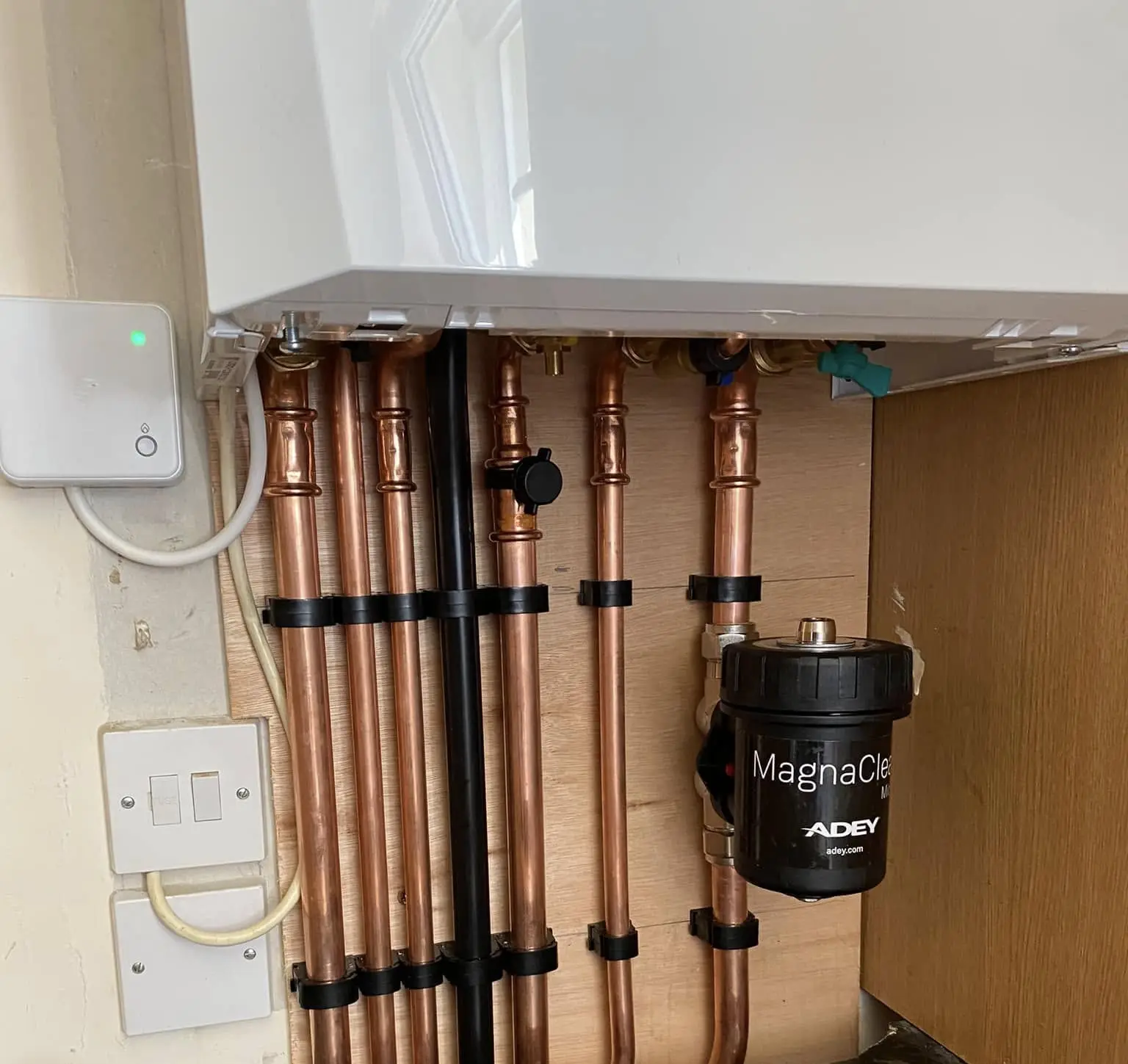
When a boiler develops a fault, it is easy to think about the appliance in isolation. However, heating problems can also come from pumps, valves, radiators, controls, pipework and other components around the system.
This is important when considering boiler repair cost, because the amount involved depends on what has actually failed and whether the fault is confined to the boiler itself. It is also worth understanding exactly what a cover policy includes before relying on it when something goes wrong.
For homeowners considering boiler cover greenock, knowing the difference between boiler protection and wider heating system protection can help avoid misunderstandings about what may or may not be covered.
Does boiler cover protect the whole heating system?
Not necessarily.
The meaning of boiler cover depends on the specific policy and provider. Some policies may focus primarily on the boiler, while others can include certain controls, central heating components or other parts of the system.
Before taking out cover, check the policy wording carefully.
Areas worth checking include:
- Boiler faults
- Heating controls
- Radiators
- Pumps
- Valves
- Pipework
- Call-out arrangements
- Parts and labour
- Repair limits
- Exclusions
- Existing fault restrictions
- Age or model restrictions
The precise terms matter because two policies described using similar language can have different levels of protection.
A policy should therefore be judged by what its documents actually say rather than by its name alone.
If you are considering heating cover, read the policy’s inclusions and exclusions carefully and ask the provider to explain anything you are unsure about before purchasing.
Which heating problems can come from outside the boiler?
A heating system contains several components that work together. A boiler can be operating correctly while another part of the system prevents heat from reaching the radiators.
For example:
- A faulty thermostat may not call for heat.
- A failed pump can affect water circulation.
- A stuck valve can restrict flow to part of the system.
- Air in a radiator can cause uneven heating.
- A leaking component can reduce system pressure.
- Blocked or restricted pipework can affect circulation.
This is why diagnosing a heating fault should involve looking at the wider system where appropriate.
A homeowner may initially assume the boiler has failed, but the actual issue could be elsewhere.
What can influence boiler repair costs?
There is no single repair price that applies to every fault.
The eventual boiler repair cost can depend on factors such as:
- The type of boiler
- The specific fault
- The failed component
- Parts required
- Labour involved
- Access to the appliance
- Whether further investigation is needed
- Whether the fault has caused damage elsewhere
A simple component replacement may be very different from a more complex repair.
It is also important to distinguish between the cost of diagnosing a problem and the cost of carrying out the repair itself. Providers may structure their charges differently, so check the terms before agreeing to work.
Could a radiator fault be covered by boiler cover?
That depends entirely on the policy.
A radiator is part of the wider central heating system rather than the boiler itself. Some forms of broader heating cover may include certain radiator-related problems, while boiler-only protection may not.
The same principle can apply to:
- Radiator valves
- Thermostats
- Pumps
- Pipework
- Motorised valves
If these components matter to you, check whether they are specifically listed as covered items.
What should you check before buying boiler cover?
The monthly or annual premium is only one part of the decision.
Review the policy for:
| Policy detail | Why it matters |
| Covered components | Shows which parts of the system are protected |
| Exclusions | Identifies faults or circumstances not covered |
| Call-out terms | Explains how assistance is provided |
| Parts and labour | Clarifies what the policy pays towards |
| Repair limits | Shows whether financial limits apply |
| Excess | Identifies any amount you may need to pay |
| Waiting period | Shows whether cover starts immediately |
| Existing faults | Clarifies whether previous problems are excluded |
| Boiler age limits | May affect eligibility or cover |
| Renewal terms | Helps you understand ongoing costs |
Policies can change over time, so always refer to the current terms supplied by the provider.
This is particularly important if you are taking out cover on an older boiler.
Does boiler age affect cover?
It can.
Some providers apply eligibility conditions based on the age, type or condition of the boiler or heating system.
There may also be exclusions relating to faults that existed before the policy began.
For this reason, it is important to answer application questions accurately and read the policy documents before relying on the cover.
If your boiler already has a known fault, taking out a new policy does not necessarily mean that fault will be covered.
The provider’s terms should explain how pre-existing problems are treated.
Before purchasing cover, check the policy’s rules around boiler age, existing faults, exclusions and waiting periods. These details can be more important than the headline premium.
See how much you could save
Which fuel powers your boiler?
Mains Gas
LPG
It just takes 60 Seconds
And then you can book a free consultation
What if the fault is not actually the boiler?
This is where a proper diagnosis becomes particularly useful.
Suppose your radiators are cold but the boiler appears to start normally. The problem could involve circulation, controls, valves or another component.
Similarly, if the boiler repeatedly loses pressure, the cause could be related to a leak, expansion vessel, pressure relief issue or another part of the heating system.
The correct repair depends on identifying the underlying cause.
Replacing a component without establishing why the system is behaving incorrectly may not resolve the original problem.
A simple example
Imagine a homeowner switches the heating on but several radiators remain cold.
The boiler fires and appears to operate normally. An engineer checks the system and finds that a circulation component is not operating correctly.
In this situation, the boiler itself may not be the failed component.
Whether the repair is covered by a particular policy would depend on the policy wording and whether that component is included.
The example demonstrates why it is useful to understand both the heating system and the terms of any cover.
Can boiler cover reduce unexpected repair bills?
Potentially, depending on the policy and the circumstances of the fault.
Cover is designed to provide assistance for specified breakdowns or repairs according to its terms. It does not necessarily cover every possible problem or every cost associated with maintaining a heating system.
Before deciding whether cover is suitable, consider:
- What components are included
- What exclusions apply
- Whether an excess is payable
- Whether repair limits apply
- Whether parts and labour are included
- Whether the boiler meets eligibility requirements
- Whether there are waiting periods
It can also be useful to compare the total cost of the policy over the period you expect to keep it with the types of protection provided.
What is the difference between boiler cover and home emergency cover?
These terms can refer to different products, so the policy wording should always be checked.
Boiler cover generally relates to specified boiler breakdowns, while broader home emergency policies may include assistance for certain heating, plumbing or other household emergencies.
However, coverage varies between providers.
A product with a broader name does not automatically cover every part of your heating system.
The safest approach is to identify the components and situations that matter to you and then check whether they are explicitly covered.
What should you do when your heating stops working?
If your boiler or heating system stops working, start with basic checks that are safe for you to carry out.
You can check:
- Whether the thermostat is calling for heat
- Whether the boiler has power
- Whether the controls are switched on
- Whether the boiler displays a fault code
- Whether the manufacturer’s basic reset procedure applies
Do not remove the boiler casing or attempt gas-related repairs yourself.
If the problem continues, contact a suitably qualified heating professional or use your cover provider’s approved repair process if your policy requires it.
If you smell gas or suspect a gas safety problem, follow the appropriate emergency gas safety guidance rather than attempting to diagnose the appliance yourself.
How can you compare boiler repair costs?
When a repair is recommended, ask what has failed and what work is being proposed.
Useful questions include:
- What is causing the fault?
- Which component has failed?
- Is the diagnosis certain or does further investigation remain necessary?
- What parts are required?
- What labour is involved?
- Is there any related problem elsewhere in the system?
- Does an existing cover policy apply?
- Are there any additional charges?
The answers can help you understand the quoted boiler repair cost rather than focusing only on the final figure.
For more complicated faults, understanding the diagnosis can be particularly important.
When might replacement be considered instead of repair?
Repair is not always the only option.
For an older boiler, a heating professional may explain that a repair is possible but that other components are also ageing. In some situations, the homeowner may wish to compare the repair with the longer-term implications of replacement.
That decision can depend on factors such as:
- Boiler age
- Fault severity
- Repair requirements
- Availability of replacement components
- Previous breakdown history
- Condition of the wider heating system
- Cost and practicality of replacement
A repair should not automatically be rejected because the boiler is old, and replacement should not automatically be ruled out because a repair is possible. The relevant circumstances should be considered.
How can Inver-Heat help with heating system problems?
When a heating system develops a fault, identifying the actual source of the problem is an important first step.
For homeowners reviewing boiler cover greenock, it is also useful to understand which parts of the system are protected and which are outside the policy.
Inver-Heat can help investigate heating problems and explain whether the issue appears to relate to the boiler or another part of the system, subject to the nature of the fault and the work required.
If your heating system is not working as expected, getting the fault properly assessed can help you understand what needs attention before deciding on the next step.
Related articles
Mains Gas
LPG
At a glance
When a boiler develops a fault, it is easy to think about the appliance in isolation. However, heating problems can also come from pumps, valves, radiators, controls, pipework and other components around the system.
This is important when considering boiler repair cost, because the amount involved depends on what has actually failed and whether the fault is confined to the boiler itself. It is also worth understanding exactly what a cover policy includes before relying on it when something goes wrong.
For homeowners considering boiler cover greenock, knowing the difference between boiler protection and wider heating system protection can help avoid misunderstandings about what may or may not be covered.
Does boiler cover protect the whole heating system?
Not necessarily.
The meaning of boiler cover depends on the specific policy and provider. Some policies may focus primarily on the boiler, while others can include certain controls, central heating components or other parts of the system.
Before taking out cover, check the policy wording carefully.
Areas worth checking include:
- Boiler faults
- Heating controls
- Radiators
- Pumps
- Valves
- Pipework
- Call-out arrangements
- Parts and labour
- Repair limits
- Exclusions
- Existing fault restrictions
- Age or model restrictions
The precise terms matter because two policies described using similar language can have different levels of protection.
A policy should therefore be judged by what its documents actually say rather than by its name alone.
If you are considering heating cover, read the policy’s inclusions and exclusions carefully and ask the provider to explain anything you are unsure about before purchasing.
Which heating problems can come from outside the boiler?
A heating system contains several components that work together. A boiler can be operating correctly while another part of the system prevents heat from reaching the radiators.
For example:
- A faulty thermostat may not call for heat.
- A failed pump can affect water circulation.
- A stuck valve can restrict flow to part of the system.
- Air in a radiator can cause uneven heating.
- A leaking component can reduce system pressure.
- Blocked or restricted pipework can affect circulation.
This is why diagnosing a heating fault should involve looking at the wider system where appropriate.
A homeowner may initially assume the boiler has failed, but the actual issue could be elsewhere.
What can influence boiler repair costs?
There is no single repair price that applies to every fault.
The eventual boiler repair cost can depend on factors such as:
- The type of boiler
- The specific fault
- The failed component
- Parts required
- Labour involved
- Access to the appliance
- Whether further investigation is needed
- Whether the fault has caused damage elsewhere
A simple component replacement may be very different from a more complex repair.
It is also important to distinguish between the cost of diagnosing a problem and the cost of carrying out the repair itself. Providers may structure their charges differently, so check the terms before agreeing to work.
Could a radiator fault be covered by boiler cover?
That depends entirely on the policy.
A radiator is part of the wider central heating system rather than the boiler itself. Some forms of broader heating cover may include certain radiator-related problems, while boiler-only protection may not.
The same principle can apply to:
- Radiator valves
- Thermostats
- Pumps
- Pipework
- Motorised valves
If these components matter to you, check whether they are specifically listed as covered items.
What should you check before buying boiler cover?
The monthly or annual premium is only one part of the decision.
Review the policy for:
| Policy detail | Why it matters |
| Covered components | Shows which parts of the system are protected |
| Exclusions | Identifies faults or circumstances not covered |
| Call-out terms | Explains how assistance is provided |
| Parts and labour | Clarifies what the policy pays towards |
| Repair limits | Shows whether financial limits apply |
| Excess | Identifies any amount you may need to pay |
| Waiting period | Shows whether cover starts immediately |
| Existing faults | Clarifies whether previous problems are excluded |
| Boiler age limits | May affect eligibility or cover |
| Renewal terms | Helps you understand ongoing costs |
Policies can change over time, so always refer to the current terms supplied by the provider.
This is particularly important if you are taking out cover on an older boiler.
Does boiler age affect cover?
It can.
Some providers apply eligibility conditions based on the age, type or condition of the boiler or heating system.
There may also be exclusions relating to faults that existed before the policy began.
For this reason, it is important to answer application questions accurately and read the policy documents before relying on the cover.
If your boiler already has a known fault, taking out a new policy does not necessarily mean that fault will be covered.
The provider’s terms should explain how pre-existing problems are treated.
Before purchasing cover, check the policy’s rules around boiler age, existing faults, exclusions and waiting periods. These details can be more important than the headline premium.
See how much you could save
Which fuel powers your boiler?
Mains Gas
LPG
It just takes 60 Seconds
And then you can book a free consultation
What if the fault is not actually the boiler?
This is where a proper diagnosis becomes particularly useful.
Suppose your radiators are cold but the boiler appears to start normally. The problem could involve circulation, controls, valves or another component.
Similarly, if the boiler repeatedly loses pressure, the cause could be related to a leak, expansion vessel, pressure relief issue or another part of the heating system.
The correct repair depends on identifying the underlying cause.
Replacing a component without establishing why the system is behaving incorrectly may not resolve the original problem.
A simple example
Imagine a homeowner switches the heating on but several radiators remain cold.
The boiler fires and appears to operate normally. An engineer checks the system and finds that a circulation component is not operating correctly.
In this situation, the boiler itself may not be the failed component.
Whether the repair is covered by a particular policy would depend on the policy wording and whether that component is included.
The example demonstrates why it is useful to understand both the heating system and the terms of any cover.
Can boiler cover reduce unexpected repair bills?
Potentially, depending on the policy and the circumstances of the fault.
Cover is designed to provide assistance for specified breakdowns or repairs according to its terms. It does not necessarily cover every possible problem or every cost associated with maintaining a heating system.
Before deciding whether cover is suitable, consider:
- What components are included
- What exclusions apply
- Whether an excess is payable
- Whether repair limits apply
- Whether parts and labour are included
- Whether the boiler meets eligibility requirements
- Whether there are waiting periods
It can also be useful to compare the total cost of the policy over the period you expect to keep it with the types of protection provided.
What is the difference between boiler cover and home emergency cover?
These terms can refer to different products, so the policy wording should always be checked.
Boiler cover generally relates to specified boiler breakdowns, while broader home emergency policies may include assistance for certain heating, plumbing or other household emergencies.
However, coverage varies between providers.
A product with a broader name does not automatically cover every part of your heating system.
The safest approach is to identify the components and situations that matter to you and then check whether they are explicitly covered.
What should you do when your heating stops working?
If your boiler or heating system stops working, start with basic checks that are safe for you to carry out.
You can check:
- Whether the thermostat is calling for heat
- Whether the boiler has power
- Whether the controls are switched on
- Whether the boiler displays a fault code
- Whether the manufacturer’s basic reset procedure applies
Do not remove the boiler casing or attempt gas-related repairs yourself.
If the problem continues, contact a suitably qualified heating professional or use your cover provider’s approved repair process if your policy requires it.
If you smell gas or suspect a gas safety problem, follow the appropriate emergency gas safety guidance rather than attempting to diagnose the appliance yourself.
How can you compare boiler repair costs?
When a repair is recommended, ask what has failed and what work is being proposed.
Useful questions include:
- What is causing the fault?
- Which component has failed?
- Is the diagnosis certain or does further investigation remain necessary?
- What parts are required?
- What labour is involved?
- Is there any related problem elsewhere in the system?
- Does an existing cover policy apply?
- Are there any additional charges?
The answers can help you understand the quoted boiler repair cost rather than focusing only on the final figure.
For more complicated faults, understanding the diagnosis can be particularly important.
When might replacement be considered instead of repair?
Repair is not always the only option.
For an older boiler, a heating professional may explain that a repair is possible but that other components are also ageing. In some situations, the homeowner may wish to compare the repair with the longer-term implications of replacement.
That decision can depend on factors such as:
- Boiler age
- Fault severity
- Repair requirements
- Availability of replacement components
- Previous breakdown history
- Condition of the wider heating system
- Cost and practicality of replacement
A repair should not automatically be rejected because the boiler is old, and replacement should not automatically be ruled out because a repair is possible. The relevant circumstances should be considered.
How can Inver-Heat help with heating system problems?
When a heating system develops a fault, identifying the actual source of the problem is an important first step.
For homeowners reviewing boiler cover greenock, it is also useful to understand which parts of the system are protected and which are outside the policy.
Inver-Heat can help investigate heating problems and explain whether the issue appears to relate to the boiler or another part of the system, subject to the nature of the fault and the work required.
If your heating system is not working as expected, getting the fault properly assessed can help you understand what needs attention before deciding on the next step.


